
Table of Contents
Dear baking enthusiasts, have you ever been captivated by those exquisite cake stands, bringing them home with joy, hoping they would perfectly complement your creations?
However, after only a few uses, you might start to worry:
Your newly purchased cake stand looks old after only a short time? * Glass ones are fragile, wooden ones keep cracking, and metal ones are prone to rusting?
You feel helpless every time you clean them, afraid of breaking them?
Faced with these problems, do you feel helpless
In my experience, many baking enthusiasts have encountered these problems. If not properly maintained, it will quickly lose its luster or even become damaged, which is truly frustrating.
I understand this pain point because I’ve struggled with it myself. Watching your beloved cake stand gradually lose its luster not only affects its appearance but may also compromise the display and even safety of food due to its instability or uncleanliness, undoubtedly casting a shadow over your baking passion.
Say goodbye to short-lived cake stands: It’s time to give your little cake a fresh new look!
Don’t let these small issues hinder your passion for showcasing your baking art! A well-maintained cake stand not only enhances the perceived value of your creations but also becomes a beautiful addition to your kitchen.
Improper maintenance can shorten the lifespan of the cake stand and, due to incomplete cleaning, can breed bacteria, compromising food safety.
If you’re looking for cake stands that truly stand the test of time, are both beautiful and practical, click here to see our curated selection of durable styles. They might inspire you and make your baking journey even smoother.
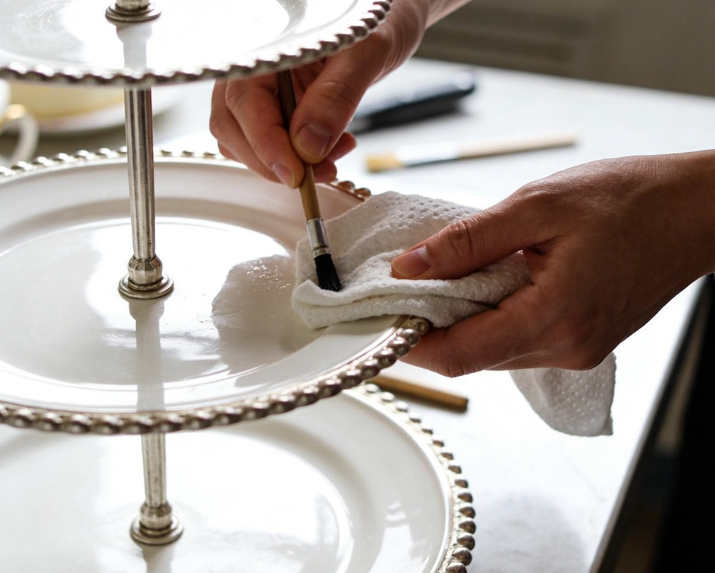
I. Understanding Your Cake Stand: Different Materials, Different Care
For the mainstream materials on the market, we need to adopt completely different cleaning and maintenance strategies:
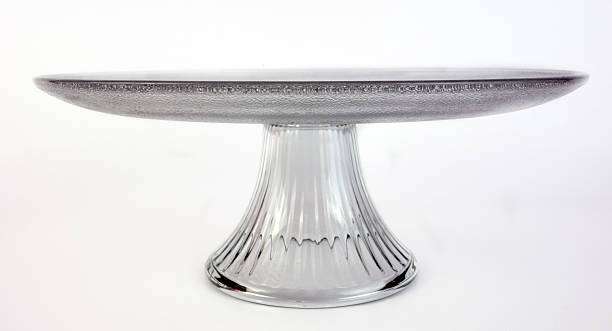
1.1 Sparkling Like Diamonds: The Delicate Care of Glass
Glass cake stands are beloved for their crystal-clear appearance and elegant, luxurious feel. However, their drawbacks are also obvious: fragile, easily retain water stains, and susceptible to sudden temperature changes.
- Cleaning SOP:
- Gentle Cleaning: Glass cake stands must be cleaned gently. Use a neutral detergent and a soft cloth or sponge to wipe them. Avoid using steel wool or abrasive cleaning tools to prevent scratches.
- To prevent water stains: After rinsing with warm water, immediately wipe dry with a microfiber cloth or let it air dry. Pay special attention to avoiding sudden temperature changes that could cause the glass to crack. For example, do not rinse it with hot water immediately after taking it out of the refrigerator, or rinse it with cold water immediately after washing it with hot water, as this will greatly increase the risk of breakage.
- Regular polishing: To maintain the shine of the glass, it can be polished regularly with a glass cleaner to restore its original appearance.
- Maintenance tips: To avoid collisions, when storing cakes, avoid direct sunlight and stacking or squeezing them. It is best to place them separately or wrap them in a soft cloth.
1.2 Warm and smooth like jade: The secret to keeping wooden cake stands moisturized
Wooden cake stands, with their natural, rustic texture and warm feel, add a unique pastoral charm to desserts. However, their drawbacks are: prone to cracking, warping, mold, and discoloration due to water absorption.
- Cleaning SOP:
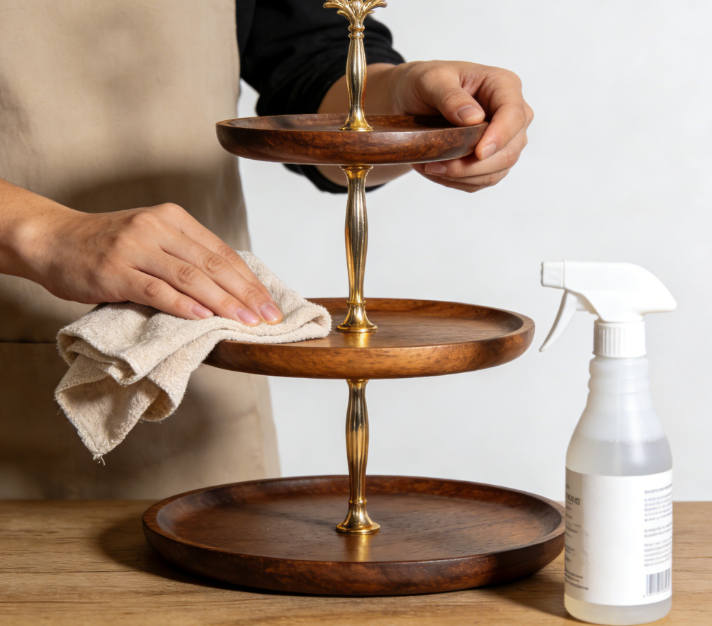
- Quick wipe: Use a damp cloth (not soaking) with a small amount of mild detergent to quickly wipe the surface of the wooden cake stand. Do not soak it in water for a long time, as the wood is very easy to swell, deform or even crack after absorbing water.
- Thoroughly dry: After cleaning, be sure to wipe dry with a dry cloth immediately and place in a ventilated place to air dry naturally, ensuring that no moisture remains.
- Maintenance tips:
- Regular “moisturizing”: Wooden cake stands need to be regularly coated with cooking oil (such as olive oil or walnut oil) to prevent them from drying out, cracking, and warping. It is recommended to do this monthly or quarterly.
- Keep away from heat and humidity: Avoid placing wooden cake stands in direct sunlight, near radiators, or in humid environments, as these will accelerate the aging and deformation of the wood.
1.3 As tough as steel: Rust prevention strategies for metal
Metal cake stands are popular for their sturdiness, durability, and versatile designs. However, their drawbacks include: susceptibility to rust (especially electroplated or non-stainless steel materials), loss of shine, and fingerprints.
- Cleaning SOP:
- 2.3.1 Gentle cleaning: Wipe the metal with a neutral detergent and a soft cloth. Remember that the metal cake stand should be waterproof and rustproof, and minimize moisture residue after cleaning.
- 2.3.2 Shiny as New: For stainless steel cake stands, you can use a stainless steel-specific cleaner or maintenance solution. This can effectively remove stains and fingerprints and restore their shine.
- 2.3.3 Dry quickly: After cleaning, be sure to dry with a dry cloth immediately to prevent water stains from forming, especially at the edges and joints, which are hard-to-reach areas where rust is likely to form.
- Maintenance tips: Avoid scratching and regularly check the cake stand for rust spots. If any are found, deal with them promptly to prevent the rust from spreading.
1.4 Lightweight and Stylish: The “Seamless” Approach of Acrylic Cake Stands
Acrylic cake stands are favored for their lightweight and transparency. However, their drawbacks include: susceptibility to scratches, dust accumulation, and yellowing/aging.
- Cleaning SOP:
- 2.4.1 Soft wiping: Acrylic cake stands are easily scratched, so a soft cloth must be used for cleaning and abrasive cleaners should be avoided. Simply wipe gently with water or a small amount of neutral soap.
- 2.4.2 Avoid abrasion: Never use abrasive cleaning materials, alcohol-based cleaners, or ammonia-based cleaners, as these will damage the surface of the acrylic cake stand, causing it to become blurry or cracked.
- Maintenance tips: Avoid contact with sharp objects. When storing cake racks, avoid direct sunlight and high-temperature environments, as prolonged exposure to sunlight will cause them to yellow and age.
II. Advanced Guide: Make Your Cake Stand More Stable and Longer-Lasting! (Solve – General SOP)
In addition to cleaning methods for different materials, some general usage and maintenance principles are also important.
2.1 Pre-emptive defenses: Pre-use checks and preparations
Prevention is better than cure. A small check before each use can greatly improve the safety and stability of the cake stand.
- 3.1.1 Stability Test: Before each use, especially for parties or weddings, the stability and load-bearing capacity should be tested. Ensure the cake stand’s structure is sturdy, the connections are secure, and it doesn’t wobble. My tests show that an unstable not only affects the display effect but may even cause the cake to collapse, so this step is absolutely essential!
- 3.1.2 Size Matching: When choosing, consider matching the size to the cake and the intended use to avoid purchasing one that is too large or too small. A suitable size will not only perfectly complement the cake but also ensure the stability.
2.2 Balanced Load-Bearing: The Art of Using Multi-Tier Cake Stands
Multi-tiered cake stands are ideal for displaying a variety of desserts, but their load-bearing capacity is a significant concern.
A multi-tiered cake stand should have its weight evenly distributed to prevent cakes from collapsing. It’s recommended to place cakes from heaviest to lightest at the top to ensure a stable center of gravity. Avoid placing excessively heavy cakes on top of the stand, as this increases the risk of instability.
2.3 Washing and Care Taboos: Not all cake racks are suitable for dishwashers
For convenience, many people consider putting the cake rack in the dishwasher.
Please note: Cake stands should not be placed directly in a dishwasher unless explicitly stated by the manufacturer. The high temperatures, pressures, and strong detergents of a dishwasher may damage the material, coating, or connectors. Handwashing is often a safer option.
2.4 Smart Storage: Giving a Secure Home
When storing cake stands, avoid direct sunlight and stacking or squeezing them. It’s best to disassemble them, wrap them individually or use protective bags, and store them in a dry, well-ventilated, dust-free place with a moderate temperature. Avoid humid or extreme temperature environments.
2.5 Cleaning frequency: How often is enough?
The frequency of cleaning a cake stand depends on its material and usage.
| Maintenance level | Cleaning/Maintenance Frequency | Key points |
|---|---|---|
| Basic cleaning | After each use | Basic cleaning is necessary to remove food residue. |
| Deep maintenance | Monthly or quarterly | Re-oiling (wood), rust prevention (metal), gloss restoration |
III. Frequently Asked Questions (FAQs)
- 3.1 Question: My glass cake stand got scratched. Can it be repaired?
- A: For minor scratches on glass cake stands, there are some glass polishing pastes or very fine sandpaper available on the market that can be used to try and repair them, but this requires very careful handling. However, for deeper scratches, repair is more difficult, and it is generally not recommended to handle them yourself to avoid further damage.
- 3.2 Question: What should I do if my wooden gets moldy? Can I still use it?
- A: If the wooden only has minor mold spots, you can wipe it with diluted white vinegar (vinegar to water ratio 1:10), then immediately wipe it dry with a clean cloth and let it air dry completely. Afterwards, be sure to reapply cooking oil for maintenance. However, if the mold is severe and has penetrated into the wood, for food safety and health reasons, it is strongly recommended to replace it, as mold may produce toxins.
- 3.3 Question: What are some ways to remove rust spots from metal ?
- A: For stainless steel cake stands, minor rust spots can be gently wiped with a stainless steel cleaner or a mixture of lemon juice and baking soda (made into a paste). Rinse immediately with water and dry thoroughly after wiping. For non-stainless steel or heavily rusted metal cake stands, professional treatment may be necessary.
- 3.4 Question: Why does always smell bad after cleaning?
- A: If still smells after cleaning, it may be due to detergent residue or insufficient drying leading to moisture and bacterial growth. Please ensure you use a neutral, odorless cleaner and allow it to air dry completely after each cleaning. For wooden cake stands, the odor may also originate from the wood itself or improper maintenance.
- 3.5 Question: How often should I do a thorough cleaning of the cake stand?
- A: Wiping down the cake stand promptly after each use is essential. Depending on the material, a deep cleaning and maintenance is recommended monthly or quarterly.
IV. Conclusion: Let every exhibition become art!
Your investment was worthwhile!
After reading this detailed maintenance and cleaning guide, do you have a clearer understanding of how to care for your cake stand? By investing a little time and effort and following the correct maintenance methods, your cake stand can always look brand new, elegantly showcasing each of your carefully crafted creations. This is not just about extending the life of your cake stand, but also a way of respecting your baking art.
Starting today, you too can become a true cake stand care expert! No more worries about worn-out or aged cake stands. Every cleaning and maintenance session is a deep conversation with your beloved baking tools.
Explore more exquisite baking-related products
If you’re looking to upgrade your baking equipment or are searching for more high-quality kitchen gadgets, purchase a durable cake stand now to make your baking journey even more perfect!