A cake stand and a cake turntable: Don’t buy the wrong first baking tool!
Almost everyone who is new to baking struggles with the same question: What is the difference between a cake stand and a turntable? Is buying just one enough?
I made this “classic mistake” the first time I made a birthday cake. I only wanted to buy something to “hold the cake,” but when the order arrived, I realized I had bought something for display, but I used it to spread cream. I only realized something was wrong halfway through…
Later, as I got more familiar with these tools, I truly understood that although they both have “cake” in their names, their uses are completely different.
If you’re also at a crossroads in your shopping journey, this article will help you clarify your thoughts once and for all.
To sum it up, they solve two completely different types of problems.
In short:
- Cake turntable: Solving the problem of “making cakes easier.”
- Cake Stand: Solving the problems of “how to arrange cakes, how to make them look good, and how to take photos.”
One focuses on the production process, while the other focuses on the finished product.
Many beginners get confused because they both look like “there’s a support underneath and a cake on top” in pictures, but in actual use, the difference in experience is very obvious.
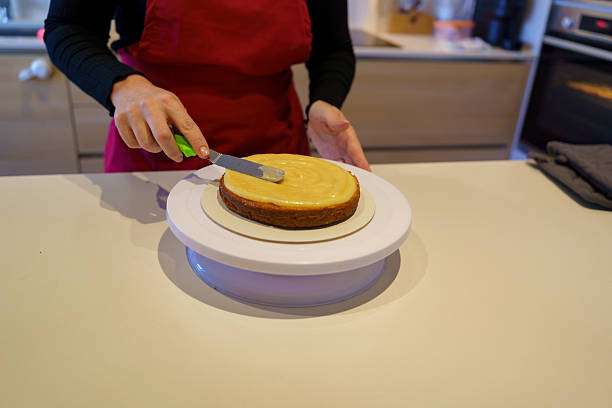
What is a cake turntable? Why is it so important for beginners?
The most distinctive feature of a cake turntable is that it rotates.
1. Core function: To stop you from focusing solely on the cake.
When spreading buttercream, scraping the sides, and trimming the edges, if the cake is stationary, you can only keep walking around the table.
The logic of a turntable is exactly the opposite—you stay still, and the cake moves.
My biggest takeaway from the first time I used a turntable to spread butter was
It turns out it wasn’t my hands shaking; it was the wrong tool.
When the cake can rotate at a constant speed, you only need to keep your spatula at one angle, and the surface will naturally be smooth.
2. In which stages is it suitable for use?
- Spread cream
- Trim the sides of the cake
- Create textures and lace
- Decorative steps requiring symmetry
If you’re planning to really learn how to make cakes and not just make one once, then a turntable is almost unavoidable.
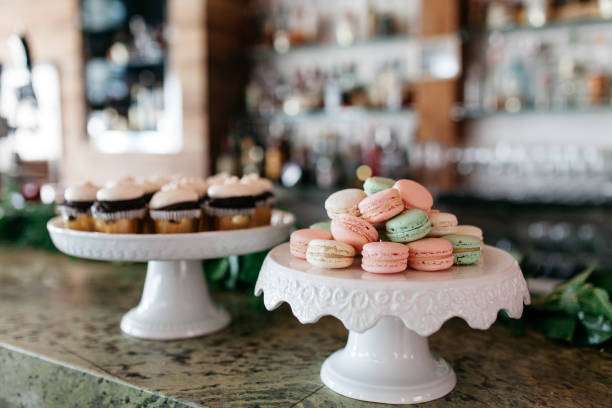
What is a cake stand? Its value lies in the “last step.”
Unlike a turntable, a cake stand does not participate in the production process, but it determines the “final appearance” of the cake.
1. Core function: To make the finished product look better.
Regardless of who you are:
- Family gathering
- Birthday party
- Wedding Dessert Area
- Take photos and post them to WeChat Moments/Blog
Placing a cake directly on the table and placing it on a cake stand at a suitable height is enormous.
I once made an anniversary cake for a friend. The finished product was just average, but after putting it on the right cake stand, my friend immediately said in a photo, “It looks like it was custom-made.”
2. It leans more towards “aesthetics” and “ritual.”
A good cake stand will help you:
- Raise the visual center of gravity
- Make the cake the focal point of the table.
- Avoid edges being obscured
Especially at large gatherings, raising the cake makes it more “present.”
Five key differences that are most easily confused (understand them all at once)
Can it rotate?
- Turntable: Yes
- For demonstration purposes only: Not allowed
This is the most fundamental difference.
Different stages of use
- Turntable: Under construction
- Cake Stand: After completion
Different requirements for stability
Turntables prioritize smooth rotation and slip resistance, while display-type turntables prioritize load-bearing capacity and balance.
Different material selection logic
- Turntable: Metal or high-density plastic, emphasizing durability.
- Display type: ceramics, wood, glass, etc., emphasizing style.
Will you directly handle the tools?
Turntables are frequently touched by spatulas and scrapers, while display stands typically only hold the cake itself.
3 common mistakes beginners make (I’ve fallen for them all)
Myth 1: I bought it for display, but I’m using it to spread cream.
Result: It couldn’t be turned, smoothed, or even leveled, and I even doubted my own dexterity.
Myth 2: Thinking that you can use it to take pictures when changing channels.
It’s barely acceptable, but it usually lacks height and a sense of style.
Myth 3: Thinking that “choosing one of two options is enough”
If you want it to be both easy to do and look good, you’ll eventually have to fill in the gaps.
So how should you choose? It depends on your actual needs.
If you are a beginner and want to learn how to make cakes
Priority: Turntable > Cake stand
The reason is simple: if a cake doesn’t look good, it’s mostly a problem during the production process, not “where it’s placed.”
If you are [already able to consistently produce finished products]
At this point, considering display items will significantly enhance the overall quality.
If you frequently bake cakes for others
Both are worth having; one is for the feel, and the other is for the surprise.
Whether a cake is easy to make depends on whether it’s rotated or not;
Whether a cake looks good depends on how it’s arranged.
Once you understand this, you’ll no longer struggle with whether or not you should make the wrong purchase.
FAQ:
Q1: Can a turntable be used for display?
Yes, but the visual effect is usually not as good as tools specifically designed for display, especially in formal occasions.
Q2: Is it necessary to buy a cake stand?
It’s not mandatory, but if you value the sense of occasion, taking photos, or giving it as a gift, it will be a big plus.
Q3: Will it be a waste for a beginner to buy the cheapest one first?
As long as you choose the right one for the intended use, the cheap one can last a long time; buying the wrong type is the real waste.
Q4: Do I really need all these tools for home baking?
You don’t need to buy them all at once, but buying them in the right order will save you a lot of trouble.
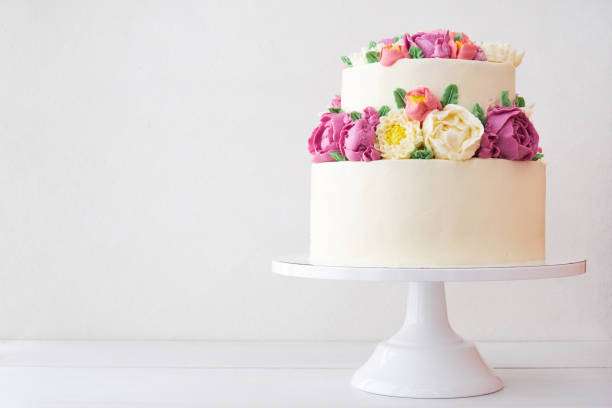
Summarize:
If you’re planning to get into baking, mastering the basic process first, then considering presentation, is the most cost-effective approach.
The sense of accomplishment you’ll feel when you successfully frost a cake for the first time and place it in its proper spot will make you understand the purpose of these tools.
Choosing the right cake stand—starting with the one that truly suits your stage—is enough.
Related Posts
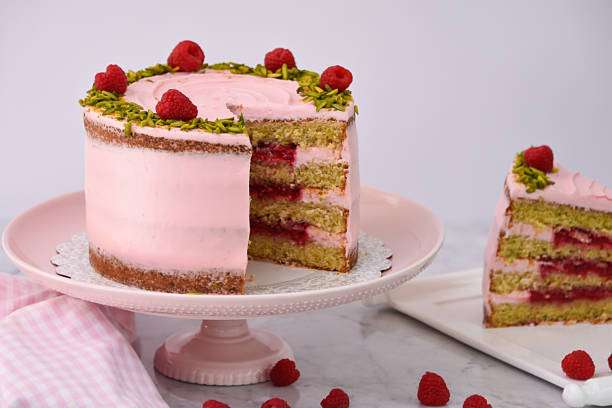
Want to cut the perfect cake? The cake stand is more crucial than you think.
-
Posted by
Cake Stand