Cake stand? Don’t rush to replace it; first check these possible causes.
When people first notice a cake stand wobbling slightly on their desks, their first reaction is often
Is it of poor quality? Should we just replace it?
Actually, that’s what I thought at first too. I was making a birthday cake for a friend at home before, using a three-tiered stand that looked pretty sturdy. But as soon as I put the cake on, I gave it a gentle push, and the whole stand started to wobble from side to side. I was really nervous at that moment, afraid that all the hard work I put into making the cake would “crash.”
After further research and trial and error, I discovered that shaking is not necessarily a problem with the product itself. Often, it’s due to the way it’s used, the environment, or details that weren’t taken into account.
Let’s start with some of the most common reasons and discuss systematically
What causes a cake stand to shake, and how do you fix it?
Don’t Rush; Figure Out Where the Shaking is Coming From.
To solve a problem, the first step is always to identify the source of the shaking. Different causes require completely different solutions.
1. Uneven Desktop Surfaces Are the Most Common “Hidden Culprit.”
This is something I only realized later.
Many household dining tables and folding tables appear flat on the surface, but a gentle press on each of the four corners reveals unevenness.
When the cake stand base cannot fully conform to the tabletop, a slight wobbling occurs, but it’s hard to pinpoint exactly what’s wrong.
Solution:
- Replace it with a flatter, harder tabletop (solid wood table, work surface).
- Place an anti-slip mat or thin silicone pad on the bottom to compensate for the height difference.
- In a temporary emergency, even folding a small piece of napkin to cover the corner can improve the situation.
This method is simple, but the results are often surprisingly good.
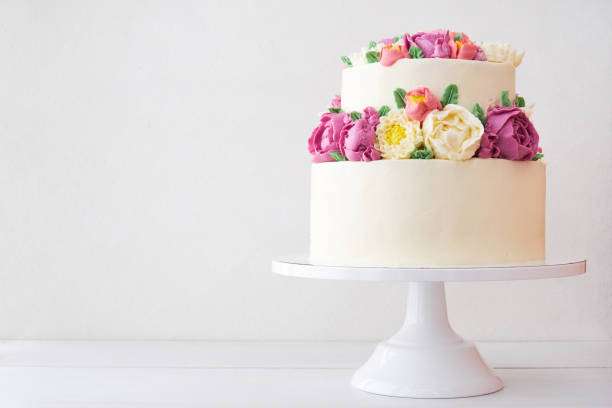
2. The Base Structure Is Unstable, or the Area Is Too Small.
Some cake stand designs prioritize aesthetics, featuring narrower bases or hollow structures.
While these designs may work fine when the stand is empty, the center of gravity shifts upwards when multiple layers or heavier cakes are placed on it.
Judgment Method:
- Gently push the chassis from the side with your hand
- If it’s not “moving as a whole” but rather “swaying,” it indicates insufficient stability.
Solution Approach:
- Avoid placing heavy cakes on this type of shelf.
- Use it only for displaying light desserts and cupcakes.
- If it must be used, an anti-slip pad can be added to the bottom, or the chassis can be weighted up.
3. The Connecting Parts Are Not Tightened (Especially for Multi-Layer Models).
This is a point that many people overlook.
Multi-layered cake stands are typically threaded or plug-in structures, and if even one section in the middle is not fully tightened, it will cause “amplified wobbling.”
The problem I had with the three-story building shaking was ultimately caused by the middle connecting rod only being tightened to 70%.
Solution:
- Disassemble and reassemble
- Tighten from bottom to top in sequence
- Just tighten it until it feels right; there’s no need to force it.
4. Uneven Distribution of Weight Can Also Cause Problems with the Cake Itself.
Sometimes the problem isn’t the shelf, but the cake.
For example:
- Too much decoration on one side
- The top layer of cake was noticeably smaller than expected.
- Fruits and ornaments are grouped together on one side
These factors will cause the overall center of gravity to shift, thus exacerbating the swaying.
Suggestion:
- Place heavy decorations on lower floors.
- When using multiple layers, the basic principle is to place lighter materials on top and heavier materials on the bottom.
- After placing the items, gently rotate them to check for balance.
Cake stands made of different materials have vastly different levels of stability.
The material directly determines the anti-shake ability, which is very obvious in long-term use.
1. Metal Version: Stable, but the Thickness Matters.
The advantages are high load-bearing capacity and long lifespan.
The disadvantage is that if the metal is too thin, it is more prone to slight wobbling due to its elasticity.
Purchase Recommendations:
- Check the chassis thickness
- Prioritize structures with one-piece molding or fewer solder joints.
2. Wooden Version Cake Stand: Beautiful Appearance, but Susceptible to Environmental Damage.
Wooden cake stands have a great ambiance, but they are more sensitive to humidity levels and have a flat surface.
Over time, even slight warping can lead to instability.
3. Plastic or Acrylic: Lightweight but Use Multiple Layers with Caution.
These types are more suitable for displaying lightweight items.
If used to display fondant cakes or multi-layered chiffon cakes, they are prone to the problem of “visual stability but actual wobbling.”
Practical Tips for Reducing Shaking During Daily Use
If you already have a fixed cake stand and don’t plan to replace it, you can try these “low-cost solutions.”
Use a Non-Slip Mat (Highly Recommended)
This is one of the most cost-effective methods.
Silicone anti-slip mats not only prevent slipping but also absorb minor vibrations.
Avoid Frequent Movement
Once the cake is placed on the cake, try not to move it around.
A lot of shaking is amplified during the process of moving it.
Regularly Inspect the Connection Points
Especially before holidays and gatherings, it’s much more reassuring to do a check beforehand than to try to fix things afterward.
When Should You Consider Replacing It with a New One?
Not all shaking can be solved with technique.
If any of the following situations occur, we recommend seriously considering replacing it:
- The base is obviously deformed.
- The connection parts are worn and cannot be tightened.
- It still shakes severely even when the frame is empty.
- The load-bearing capacity is clearly insufficient for the intended use.
A stable cake stand is not just about how good it looks but also about safety and the integrity of the finished product.
FAQ:
Q1: My newly purchased cake stand is wobbly. Is this a quality issue?
Not necessarily. First, check if the tabletop is flat and if the joints are tightened. Then determine if there is actually a structural problem.
Q2: Are three-layer structures more prone to wobbling than two-layer structures?
Yes. The more layers there are, the higher the center of gravity and the greater the requirement for stability.
Q3: Will the anti-slip mat affect the appearance?
Most anti-slip mats can be hidden at the bottom and will not affect the overall aesthetics.
Q4: Can the cake for display and the cake for cutting be the same?
Yes, but only if it’s stable enough. The external force used when cutting the cake is more likely to cause it to wobble.
Q5: Is slight shaking normal?
It is acceptable within a controllable range, but it should not affect the safe placement and cutting of the cake.
Summarize:
After experiencing a tense moment where I almost crashed, my only requirement for a
cake stand now: stability is more important than anything else.
If you’re struggling with a wobbly cake, consider paying more attention to the base, materials, and structure.
A stable choice not only protects the cake but also allows you to be more composed during important moments.
Before making a purchase, pay close attention to the cake stand‘s load-bearing capacity, chassis, and structural details to ensure your peace of mind.

Related Posts
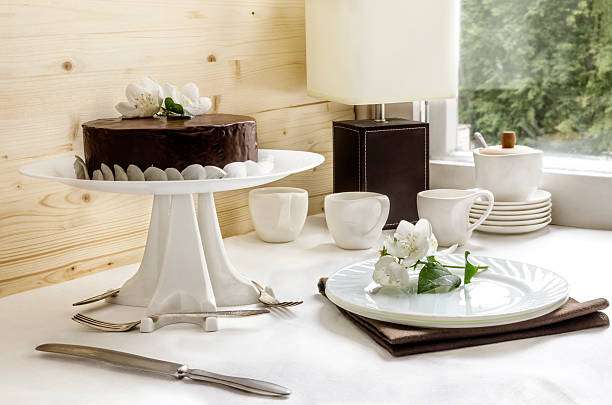
Does the cake stand base matter? How to choose one that is both stable and aesthetically pleasing?
-
Posted by
Cake Stand
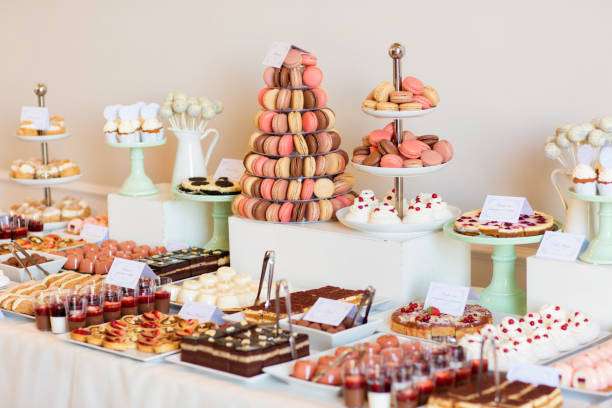
Is your cake stand necessary? A deep dive into the topic, giving you peace of mind when making your purchase.
-
Posted by
Can a cake stand be unstable if it’s too high? Many people overlook the potential dangers associated with height
-
Posted by
Wooden Cake Stands Get Moldy or Cracked? Real-World Experience and Tips for Avoiding Common Problems.
-
Posted by
Want to cut the perfect cake? The cake stand is more crucial than you think.
-
Posted by
Multi-Layer Cakes for Cake Stands: The Overlooked “Solid-Load Test”
-
Posted by